Thursday, March 31, 2011

Chapter 2 Response: Digital technologies as a medium


We live in a digital world and we interact with digital technologies on a daily basis. Artists have been right alongside the grand visions of technicians since the invention of computer technologies in the 1960’s.
 I believe that digital technology in art applications are divided into two separate categories. One is that digital technology is a tool, just like a paintbrush or pencil. It is not the tool that produces art but the artists vision. Digital technology is also a medium; it is a platform from which the artist can communicate to the viewer. As an artist I see digital technology as a medium the same way I see a blank canvas a piece of art that has yet to be created. I like how Merriam Webster Online defines medium: “as a means of effecting or conveying something: as a channel or system of communication, information, or entertainment also a mode of artistic expression.”
            A digital medium that has always been fascinating to me is fractal art. Before making a fractal for myself, I had the perception that fractal software was purely mechanical and that the operator did not have much choice with the design. I found this to be much different when I learned the software for myself. The thought that you could turn mathematics into detailed and colorful pieces of art amazed me. I am not a fan of math and it has always been such a struggle for me. I thought that you would have to understand mathematical algorithms to create fractal art but have found it to be much easier than I thought and much more creative.
The history of fractals is very interesting; a mathematician named Benoit Mandelbrot calculated a mathematical formula called the Mandelbrot set (Z = Z2 + C) that generates a two dimensional fractal shape. He also coined the phrase fractal in the 1970’s from that Latin word fractus. A fractal is a broken geometric shape which is subdivided into parts. Before the invention of computers fractals were only a theory because the calculations were so complex. The key to producing a fractal is inputting the different variables of a formula in a computer software program.
There are many fractals found in nature such as the formation of ice crystals in a snow flake or the detail spiral on shells. As computer technology has advanced so has the beauty and realism of computer generated fractals. Newer technology is bringing life to fractals which make it a very effective medium in the digital world.

Tuesday, March 22, 2011

Fractals

I am learning how to use the fractal software from Apophysis. These are the ones that I made today, they are so much better than the ones I made yesterday. I am looking forward to what I can make tomorrow! Thank you diviantART tutorials!

Lava Lamp
Magic Carpet


Grandma's Doilies

Thursday, March 10, 2011

Project 2 - The Sacred Bird


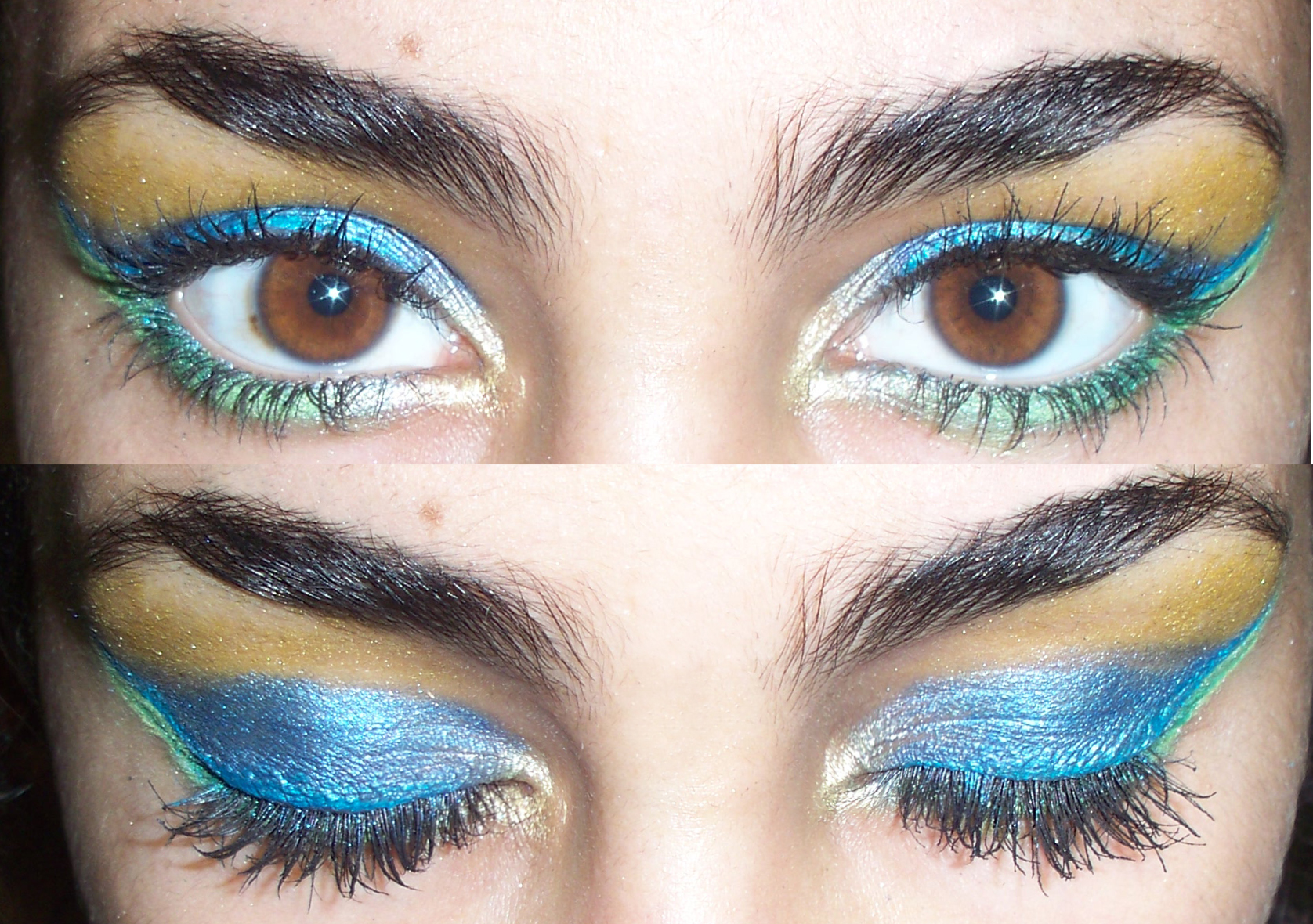
What is a fabrication, simulation or artificial? Is it a lie, fairy tale, or a falsity? The art of fabrication can be traced to back to ancient times with depictions of humans with god like features. In the present with digital technological advancements we have the tools to make fabrication more believable. I compare my fabrication of a peacock with eyes in the tail feathers to a Greek myth.
The story of the sacred bird; The Peacock
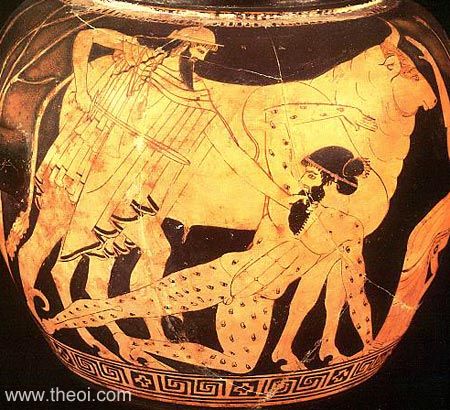
In Greek Mythology the thought that the peacock has eyes its tail feathers comes from a story about Zeus and Hera. Zeus is a Greek god who was the father of gods and men.  His wife Hera is a Greek goddess who was responsible for women and marriage. Hera was suspicious of Zeus’s faithfulness and sent her hundred eyed giant named Argus to spy on him and find his trysting places. When the giant discovered Zeus with a maiden Io, Zeus turned her into a white cow to escape. Hera saw through the disguise and requested the cow as a gift for which Zeus could not refuse her. She then sent her giant to watch the cow because even when he slept some of his eyes stayed open. To save his love, Zeus sent Hermes, the messenger of the gods to rescue Io. They devised a plan that all of giants eyes would close if Hermes played his flute. Hermes was able to slay the giant in his sleep and Io was able to escape.  When Hera discovered the slain Argus she gathered his eyes and placed them in the tail feathers of her favorite bird the peacock to honor him.


The hardest part of this project was deciding what project to choose. I started with many other ideas but settled on the peacock project. Whenever I see a peacock I always picture human eyes in the tail feathers. Completing this project I was able to make that vision come true. It was a happy accident learning about the Greek myth of the peacock and I think the story goes very will with the project.


This is how I accomplished this project:

1. Isolate the eye by erasing the background


2. Copy the eye


3. Paste the eye onto the peacock image


4. Use free transform to get the eye positioned right


5. Smudge the hard lines of the eye


6. Adjust the color

Repeat with open and closed eyes about 40 times!


Source Images:

 Peacock

Eyes

Greek Myth


Thursday, February 24, 2011

Chapter 1 Response


Reading Chapter one of my Digital Art textbook I have learned the evolution of the Internet and the digital image. During the cold war the United States developed the Advanced Research Projects Agency. This agency was within the Department of Defense and was created to stay on top as technological leaders of the world. The agency wanted to create a communication network that was safe from nuclear war. During the 1960’s four supercomputers were built, networked together and placed at universities across the country. They called this network ARPANET and this was the beginning of the Internet.
The first creation of digital artwork was also developed in the early 1960’s and was created by a research technician from Bell Laboratories. His name was Michael Knoll and his computer generated images were abstract in form, created out of mathematical algorithms, (like a geometric drawing on a etch a sketch). As computer technology advanced so did the application for digital art forms. Early digital art was not considered art because it did not have a physical presence and was thought that the computer did all the work not the artist.
An artist featured in chapter one that is fascinating to me is the work of a German artist by the name of Jochem Hendricks. He has made organ response art called Augenzeichnungen when translated to English is Eye Drawings during the 1990’s. A subject wears an eyeglass like device which measures eye movements as the eye traces a target like text or an image then digitized this information into a line drawing. He accomplishes this with the use of infrared, video and a computer. He describes his work as, “Eye-drawings are drawings done directly with the eyes, without the slightest interference of the hands - the organ of perception being turned into the organ of expression.” (Hendricks n.d.) Since the 1990’s eye tracking technology has advanced so much and is now a standard features to some digital cameras. This brings me back to the thought of technology doing all the work and what it means to have an eye for photography.


Hands

Desk
Face

Works Cited

Hendricks, Jochem. Jochem Hendricks. http://www.jochem-hendricks.de/englisch/w_augen/non_index.htm (accessed February 22, 2011).


Thursday, February 10, 2011

Project 1: Multiple Personalities


The role of photography has evolved over time and what was once reserved for the wealthy and privileged is now available to anyone. In the past the role of photography was once used to capture and preserve simple memories. In comparison to the role of photography in contemporary society which is now used to inform, document, entertain and create desire. I believe that in today’s American obsession with consumerism photography affects and influences our lives by creating desire.  The reality of a photographic image is subjective, it is a communication between the creator and the viewer but only the viewer can decide if it is the truth.  As the technology of digital manipulation advances the reality of a photograph becomes less accurate. I no longer look at present photography as the truth but I appreciate it as an art form.
My composition is a humorous look into the reality digital photography. The original photographic images are captured expressive moments in the subject’s face. On their own they are just a candid look into the lives of people and an animal but combined together form another meaning. I have titled this piece Multiple Personalities. I came across an image of a drawing that had heads stacked inside one another and thought it would be entertaining to see that type of image using photographs of real people.  It reminds me of the duality of our inner selves. I feel that we each have moments in our lives that we are a; cool headed dude, a crazy chick, a kitty cat and of course a clown.
For the technical aspects of this composition I use pretty basic beginning Photoshop tools. I began by eliminating backgrounds of the photographs by using the quick selection tool. Areas that I could not isolate with the quick selection tool I used the background erasure with a small point to get the fine details around the subjects. I used the elliptical marquee tool to layer ovals on top of the heads to create the illusion of them being open and empty.  I then filled the bottom ovals with the subject’s skin tone color and filled the top ovals black using the paint bucket function. I used a cloudscape for the background and adjusted the opacity to tone down the colors. I copied and pasted each head into a different layer on top of the cloudscape.
I would like to enhance the composition with some highlights and shadows but I could not get them to look right. I enjoyed my first project for Digital Arts class because I was able to find a concept and then fit it within the criteria of the assignment. 


Source Images:
Man
Girl
Cat
Clown